Curated Guided Tours & Priority Admissions
Verified excursions with licensed local guides, skip-the-line monument access, and 24-hour full refund guarantees via GetYourGuide and Viator.


The Granite Throat of Rio Coxinas: 300 Million Years of Faultlines
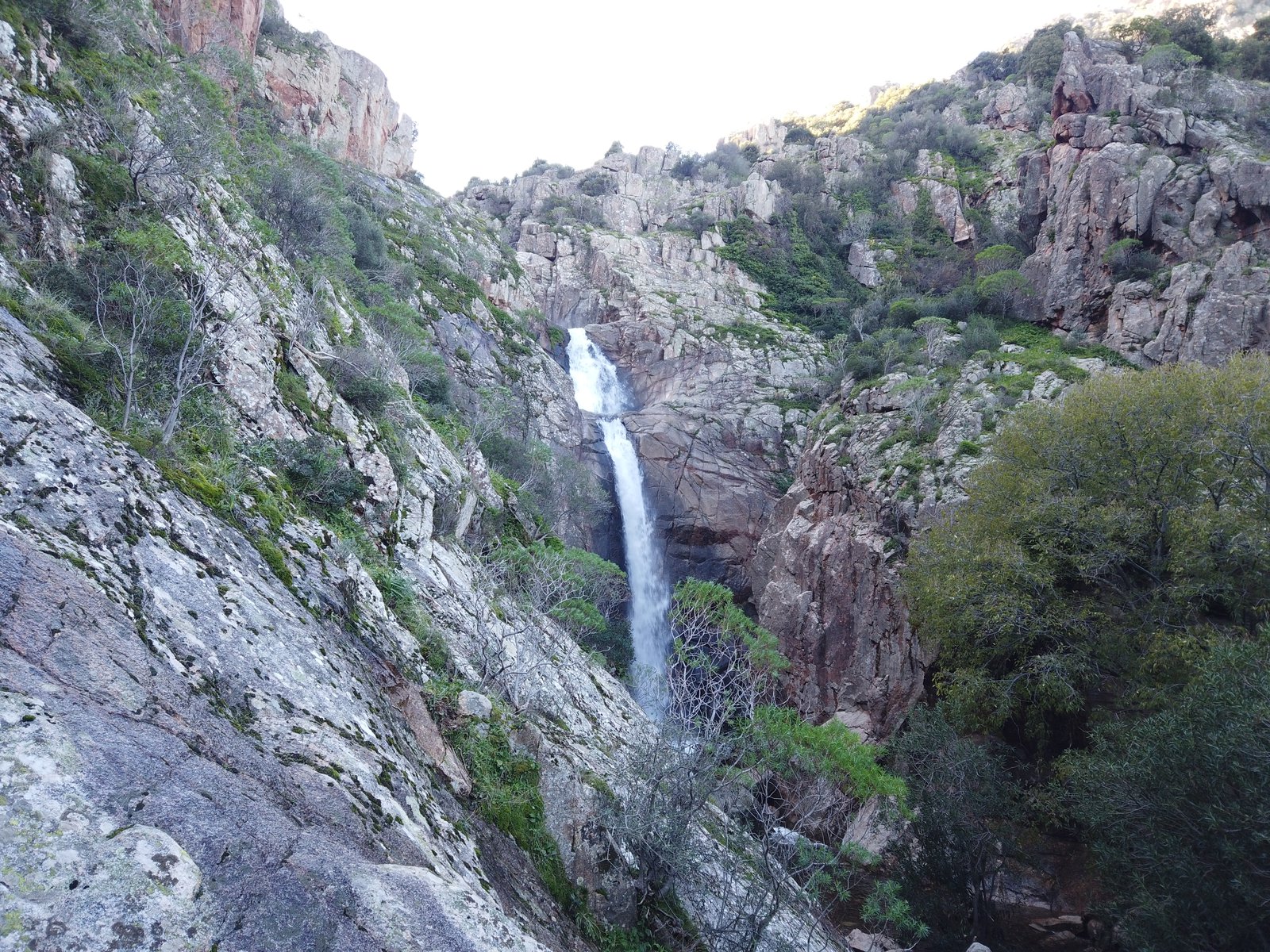
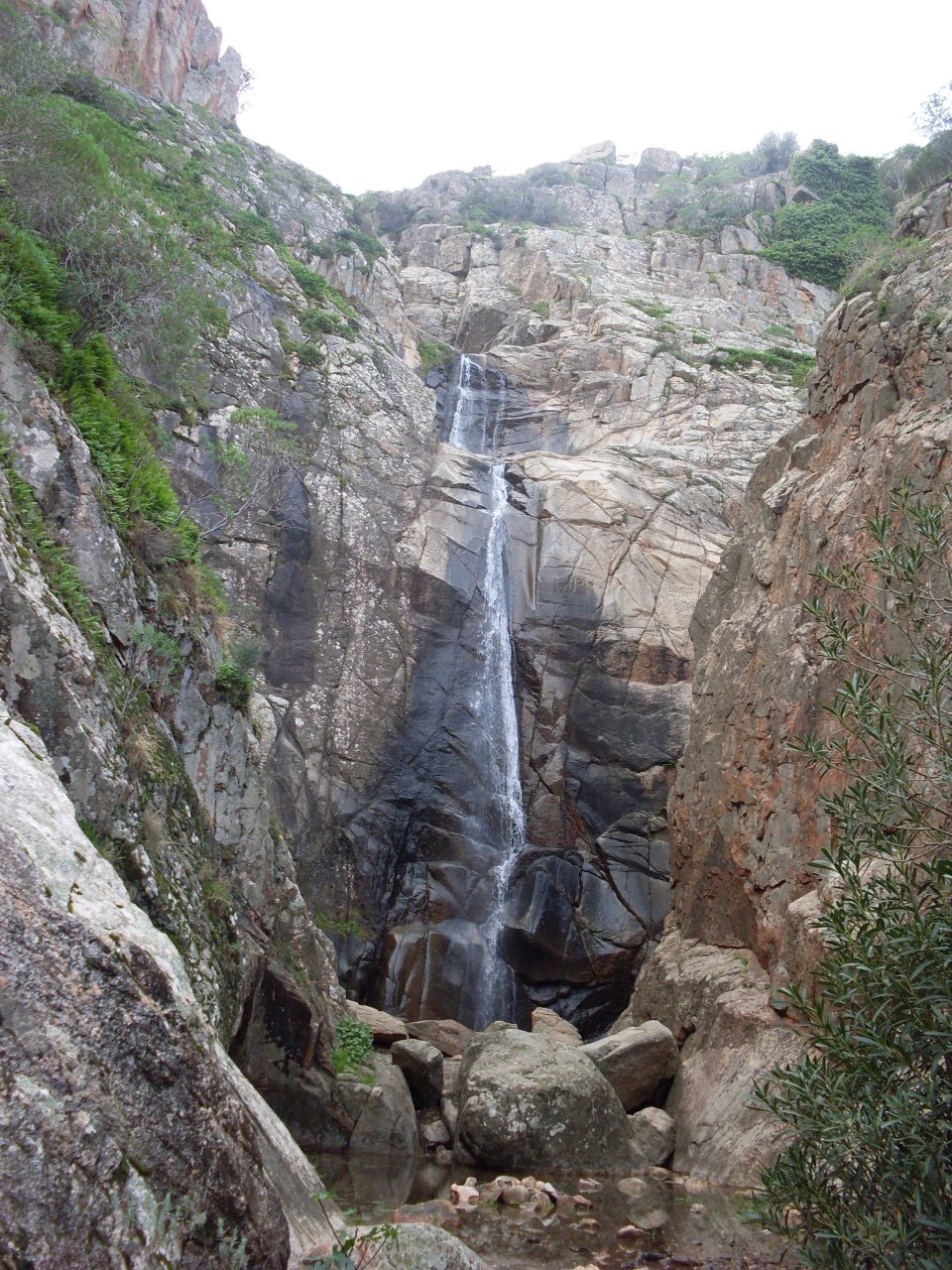
In the Sardinian language, the toponym Sa Spendula translates with blunt directness: The Waterfall. Yet geographically, this geological cleft is singular across the island. Located just two kilometres north-west of the historic centre of Villacidro, at the dramatic border where the fertile agricultural plains of the Campidano terminate abruptly against the jagged mountain bulwark of Monte Linas, Sa Spendula marks an ancient tectonic collision.
The geological foundation of the falls consists of dense, crystalline Hercynian granite dated to roughly 310 million years ago, interbedded with dark Silurian and Ordovician metamorphic schists. Over geological epochs, the Rio Coxinas—a mountain torrent draining the high watershed basins of Monti Mannu and Canale Coxinas—exploited a vertical tectonic fracture in the granite wall.
The result is a multi-tiered hydraulic cascade with a total drop of approximately sixty metres. The upper torrent rushes through a narrow granite slot before plunging over three distinct stone steps, terminating in a final vertical leap of nearly thirty metres into an emerald-tinted natural plunge pool (marmitta dei giganti) carved into solid bedrock by millennia of swirling gravel and violent hydraulic pressure.
Looking for More Hiking Routes Across Sardinia?
While Sa Spendula offers scenic canyon walking, south-western and central Sardinia boast world-class multi-day trekking trails. For GPS route downloads, canyon safety guides, and island trekking connections, consult our dedicated hiking network at sardiniawalking.tours.
"Sopra la roccia plumbea": Gabriele D'Annunzio's 1882 Encounter
In May 1882, the celebrated Italian poet, novelist, and romantic dramatist Gabriele D'Annunzio—then a brilliant nineteen-year-old journalist writing for Rome's Cronaca Bizantina—embarked on an expedition across southern Sardinia alongside writer Edoardo Scarfoglio and illustrator Cesare Pascarella.
Reaching Villacidro on horseback after crossing the sun-baked Campidano plain, D'Annunzio was guided into the narrow gorge of Sa Spendula. Stunned by the contrast between the parched lowland plains and the deafening, spray-misted canyon roar, he penned one of his most vibrant early landscape sonnets, simply titled La Spendula:
La Spendula — Gabriele D'Annunzio (Villacidro, 1882)
dei monti, l'alpe su l'erma pendice
sorge: la nebbia su l'umida aprìce
valle s'accampa in foggia di recinto.
Siede Villacidro in fondo: e il labirinto
delle sue vie la pioggia che disdice
allaga; mentre il pastore felice
muta il suo gregge e 'l pascolo continto.
Ed una selva d'elci e d'oleandri
e d'aranci e di pini odora l'aria;
e su la via che mena al dirupato
alveo, la spendula con furia varia
sopra la roccia plumbea s'effonde,
e l'acqua balza e sibila nell'ombra.
of mountains; the alp rises on the solitary slope:
mist camps across the damp open valley
in the shape of an enclosure.
Villacidro sits in the deep: and the labyrinth
of its streets is flooded by torrential rain;
while the happy shepherd leads his flock
and changes pasture.
And a forest of holm oaks, oleanders,
oranges, and pines perfumed the air;
and on the path that leads to the craggy
chasm, the waterfall with changing fury
pours out over the leaden rock,
and the water leaps and hisses in the shadows.
Today, a bronze commemorative plaque and stone monument bearing these verses stands at the perimeter of the municipal pine park (Pineta di Sa Spendula), where generations of travellers have sat under maritime pines listening to the very waters that inspired D'Annunzio's verse.
The Seasonal Hydrology Warning: Why Summer Tourists Find a Trickle
The most common complaint lodged on travel review portals regarding Sa Spendula stems from a profound misunderstanding of Mediterranean hydrology. Sa Spendula is a rain-fed, seasonal mountain cascade, not an Alpine glacial torrent.
The Rio Coxinas catchment basin relies entirely on autumn, winter, and early spring Atlantic weather fronts sweeping across the Mediterranean. Understanding this hydrological reality dictates the exact quality of your field encounter:
| Window / Season | Water Flow Status | Visual & Acoustic Experience | Field Rating |
|---|---|---|---|
| Nov – Mar (Winter Core) | Maximum Surge (Peak) | Roaring cataract, heavy foam spray, overflowing base pool | ★★★★★ (Spectacular) |
| Apr – May (Spring Flush) | Steady Vigorous Flow | Excellent volume, clear water, blooming oleander & cistus | ★★★★★ (Optimal Visit) |
| June (Early Summer) | Diminishing Stream | Moderate ribbon of water down granite face; calm picnic park | ★★★☆☆ (Pleasant Shaded Stop) |
| Jul – Aug (Peak Drought) | Slender Trickle / Dry | Water drops to a thin seam or disappears completely; dry rock | ★★☆☆☆ (Granite Canyon Only) |
Actionable Takeaway: If you are vacationing in Sardinia during July or August, do not expect a thunderous Alpine spectacle. Visit Sa Spendula instead for its cool shaded pine forest, relaxing picnic tables, easy access from the highway, and as a starting trailhead for mountain hikes into the high granite ridges of Monte Linas. Conversely, if visiting between November and May—particularly after a day of rain—Sa Spendula delivers one of the rawest natural spectacles on the island.
Active Adventure: Canyoning Canale Coxinas & CAI Trail 109
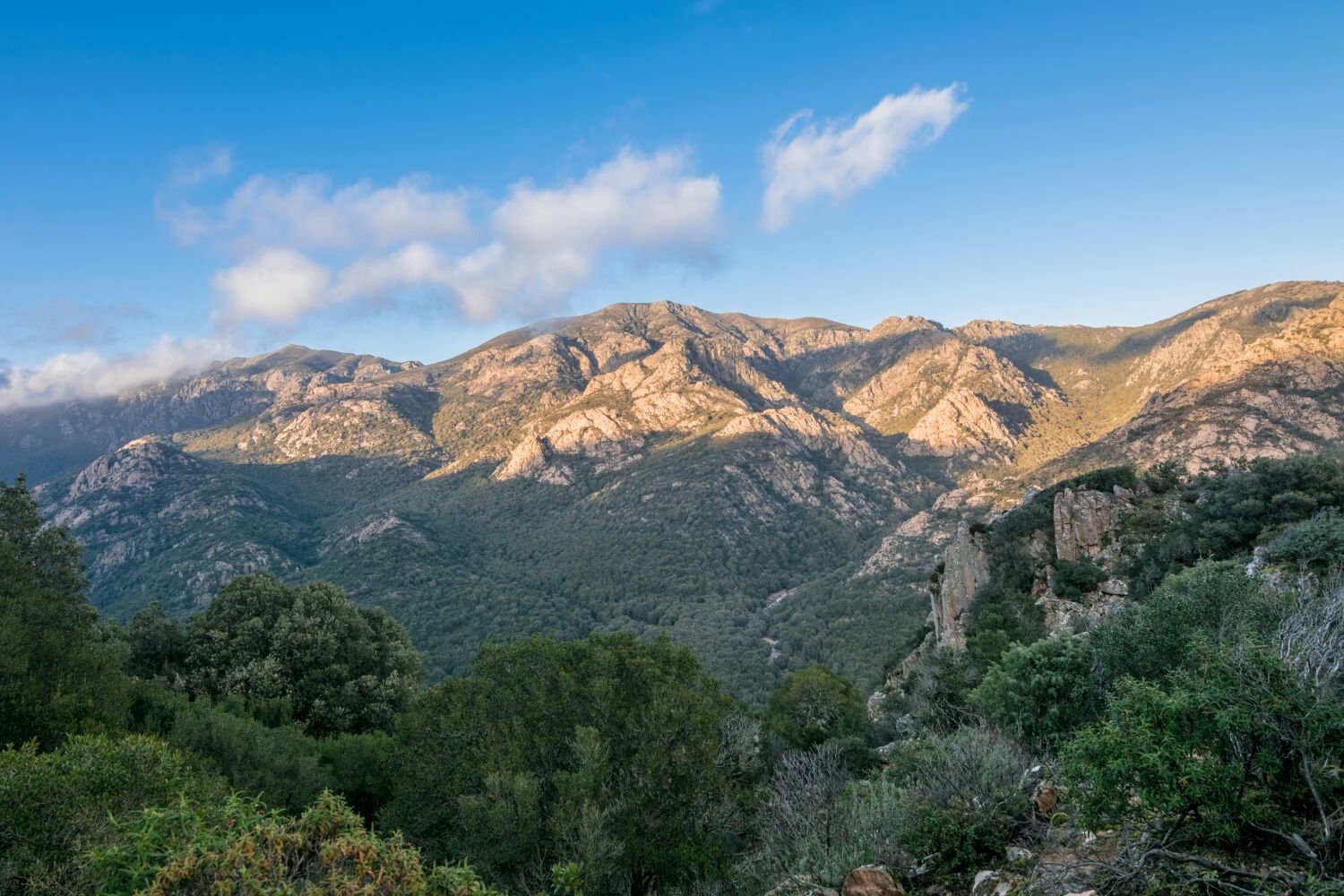
For casual walkers, the visit to Sa Spendula involves stepping out of a vehicle and strolling 150 meters along an easy gravel promenade. However, for mountaineers, trail runners, and canyoners, the gorge serves as the gateway to the vast, untamed Parco Naturale del Monte Linas.
Trail 1: Sentiero CAI 109 (Sa Spendula – Canale Coxinas – Campu de Linas)
Marked with standard red-and-white CAI trail blazes, Trail 109 departs immediately to the right of the waterfall base bridge. It ascends steeply along the rocky northern flank of the gorge, gaining 380 meters of elevation in under two kilometers. The path weaves past ancient holm oaks, wild cyclamens, and granite viewpoints overlooking the entire Campidano plain out to the Golfo di Oristano. It continues inland toward the high plateau of Campu de Linas and the peak of Monte Omo (885 m).
Difficulty: E (Excursionist) · Elevation Gain: +420 m · Duration: 3h 30m return · Sturdy hiking boots mandatory.Adventure: Technical Canyoning in Canale Coxinas
The upper riverbed of Rio Coxinas above the waterfall constitutes one of southern Sardinia's premier aquatic canyoning descents. Suitable for intermediate canyoners during wet months (November to May), the route features six vertical abseils ranging from 8 to 28 meters, natural granite waterslides (toboga), and deep pool jumps. The final abseil lands directly in the main plunge pool of Sa Spendula in full view of visitors on the viewing bridge.
Technical Rating: v3 a3 II · Wetsuit 5mm required · Certified mountain guide recommended (Collegio Guide Alpine Sardegna).Red Flags & What to Avoid at Sa Spendula
In keeping with our uncompromising editorial commitment to ground truth, we document the specific hazards, logistical traps, and oversights travelers should navigate:
- The Wet Granite Slip Hazard: The granite surfaces flanking the base pool and riverbed are coated in microscopic river algae and fine water mist. Stepping onto wet granite boulders in smooth street shoes or flip-flops leads to immediate slips and severe ankle sprains. Keep children on the timber viewing bridge.
- Flash Flood Dynamics (Piena Improvvisa): During heavy autumn thunderstorms in the Monte Linas high basin, the narrow gorge of Rio Coxinas can experience violent hydrological surges within thirty minutes. If heavy rain begins inland, immediately exit the canyon floor and do not attempt to cross swollen stream channels.
- Picnic Trash Enforcement: While the pine park offers masonry barbecue stations and picnic tables, garbage collection is strictly regulated under the municipal waste ordinance of Villacidro. Leaving plastic containers, glass bottles, or charcoal embers behind will result in municipal police citations (€150–€500). Always pack out everything you carry in.
- The Midday Summer Disappointment: Driving over an hour from Cagliari in August expecting a roaring waterfall without checking recent rainfall status will lead to frustration. If visiting in mid-summer, re-frame the trip as a forest picnic and combined cultural exploration of Villacidro's Lavatoio Liberty and museum.
Direct Choice FAQ: Real Visitor Dilemmas Resolved
When is the best time of year to see Sa Spendula flowing with water?
The optimal window to witness Sa Spendula at maximum volume spans from late October through May, especially 24 to 48 hours after substantial rainfall over the Monte Linas massif. During the dry Mediterranean summer (late June through August), the rain-fed Rio Coxinas watershed dwindles significantly, often reducing the cascade to a quiet trickle or dry granite face. For roaring torrents and foaming spray, visit in late autumn, winter, or early spring.
Is there an entrance fee or parking charge to visit the waterfall?
No, access to the Cascate di Sa Spendula waterfall and the surrounding municipal pine park is completely free and unrestricted year-round. There is no entrance gate, no ticket fee, and the paved parking lot situated right at the trailhead (150 metres from the waterfall base pool) is free of charge. Picnic benches and shaded tables are open to all visitors on a first-come basis.
Can you swim in the natural pool at the base of the waterfall?
Wading in the shallow pebble areas of the stream is common in spring, but swimming directly in the deep plunge pool beneath the vertical drop is not recommended. The water originating from mountain granite gorges remains intensely cold (under 13°C even in May), and submerged granite boulders with slippery algae present foot entrapment and slip hazards. Furthermore, diving from surrounding rocks is strictly prohibited by municipal safety ordinances.
How difficult is the walk from the parking area to the waterfall?
The primary walk from the car park to the base viewing bridge of Sa Spendula is very easy and accessible to travelers of all physical fitness levels. It follows a flat, packed dirt and gravel promenade of approximately 150 meters (a 3-minute stroll) bordered by maritime pine trees and oleanders. However, continuing past the base up the steep hiking trails (such as CAI Trail 109 toward Canale Coxinas) requires sturdy footwear and mountain hiking conditioning.
What did Gabriele D'Annunzio write about Sa Spendula?
In May 1882, a 19-year-old Gabriele D'Annunzio visited Villacidro alongside fellow writers and was so captivated by the dramatic roar of the waterfall that he composed the famous sonnet 'La Spendula' in hendecasyllables ('Dense di nubi il fuso orrido cinto...'). The sonnet celebrates the wild, untamed rushing of water over leaden granite and cemented Sa Spendula's place in Italian classical romantic literature. A stone monument inscribed with the poem stands in the pine park near the falls.